
RECENT POST
TOP POST
libphonenumber vs a Validation API: What the Library Cannot Tell You
libphonenumber is Google's open-source library for parsing, formatting and validating phone numbers against each country's numbering plan. It works offline and is excellent at turning messy input into valid E.164 numbers. It cannot tell you whether a number is in...

Validating Phone Numbers in PHP: Regex, Libraries and APIs
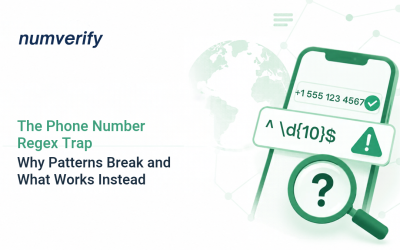
The Phone Number Regex Trap: Why Patterns Break and What Works Instead
The most reliable regex for phone numbers is a permissive one: an optional plus sign followed by 7 to 15 digits with spaces, dashes, dots or brackets allowed. For stored numbers, use the E.164 pattern ^\+[1-9]\d{1,14}$. Regex can only check format; it cannot tell you...
Validating Phone Numbers in JavaScript: Regex vs API
Phone number validation in JavaScript works best in two layers. In the browser, a permissive regex on an input of type "tel" catches typos instantly. On your server, a validation API confirms the number is real and returns its country, carrier and line type. Regex...
E.164 Format: How to Normalize International Phone Numbers With an API
One customer can enter their phone number three ways: (415) 858-6273, 415.858.6273, and +1 415 858 6273. Without normalization, those entries can become duplicate CRM records, duplicate OTP attempts, and unnecessary support issues. The E.164 format solves the...
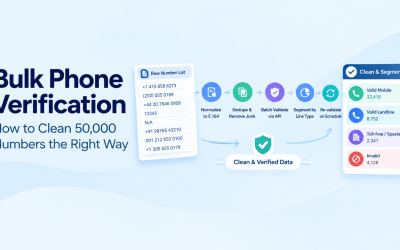
Bulk Phone Verification: Cleaning a 50,000 Number List the Right Way
A bulk phone number lookup cleans a large list in five steps: normalize every number to E.164, remove duplicates and obvious junk, validate the remaining numbers through an API in rate-limited batches, segment the results by validity and line type, and re-validate on...